

EN

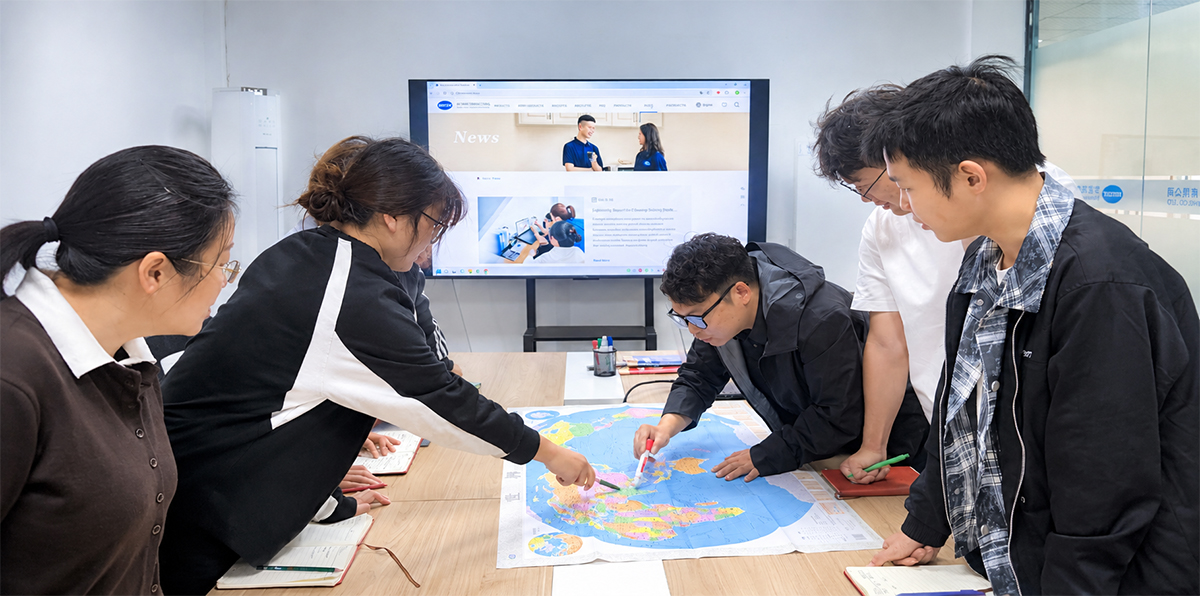
Driven by curiosity, technical understanding and a shared commitment to customers, our people make every connection more meaningful.
At RHT, understanding the global electronics industry begins with a simple question: How do engineers work in different parts of the world, and what challenges do they face?
During team discussions, a world map often becomes the starting point. We explore different countries, identify potential markets and exchange ideas about regional industries, customer expectations and engineering practices.
Every market has its own characteristics. Manufacturing environments, application requirements and technical priorities can vary significantly from one region to another. Understanding these differences takes more than market research. It requires direct communication and practical experience.
That is why our sales engineering team regularly visits customers in different countries. Through face-to-face meetings, factory visits and technical discussions, we gain a clearer understanding of their products, applications and project requirements.
These experiences also shape the way we approach customer support. Rather than relying only on emails and online communication, we believe in building relationships through real interactions and a deeper understanding of each customer's working environment.
When you visit our Ningbo office, some team members may be away on business trips or customer visits. This is a natural part of how we work. Our international activities allow us to stay connected with customers and better understand the industries we serve.
For our team, electronics is more than a professional field. It is an area of genuine interest.
Understanding a connector, relay or other electronic component involves much more than reading its specifications. We want to know how a product is assembled, how its internal structure works and how its performance relates to actual application conditions.
Our daily learning often takes place through practical activities. We examine product structures, disassemble components, perform soldering tests, review technical drawings and investigate details that deserve closer attention.
Sometimes, a small technical question can lead to a longer discussion or a hands-on investigation. We see this as an important part of developing professional knowledge.
Not every question has an immediate answer. What matters is having the willingness to investigate, communicate with the relevant team members and find reliable information before responding.
This practical approach helps us communicate more effectively with R&D engineers and understand the technical considerations behind their decisions.
A strong team is built on people with different backgrounds, experiences and ways of thinking.
At RHT, each sales engineer contributes a unique perspective to customer communication and project coordination.
Nora graduated from the University of Electronic Science and Technology of China and joined RHT through an internship. Her academic background gave her an early understanding of electronics, while her university experience also provided practical exposure to soldering and component handling. Today, she supports customer requirements and coordinates ongoing projects.
On one occasion, a European partner urgently needed a product to keep its production schedule on track. Nora quickly coordinated the necessary arrangements, helping ensure that the shipment was dispatched on the same day. It was a good example of how timely communication and efficient coordination can make a real difference.
Amy works closely with OEM customers and is familiar with the challenges associated with production schedules and component supply.
Recently, a customer was waiting for a critical component before production could continue. Amy kept monitoring the shipment into the evening, confirmed its arrival and sent the customer a reassuring update:
"I've checked your package. Your goods have arrived. You don't need to stop production."
A short message, but one that addressed the customer's most immediate concern.
Mia has built extensive product knowledge through continuous involvement in customer projects. She pays attention not only to the questions customers raise but also to technical details that may influence product selection or application performance. Her observations often bring additional value to engineering discussions.
Barry approaches his work with a strong focus on precision. He pays close attention to details and believes that accurate information is essential to dependable customer support.
Lily is particularly good at recognizing data patterns and organizing information. Her analytical approach helps the team follow customer developments and better understand project progress.
Sam is known for keeping detailed notes. Whether he is attending a meeting, working at his desk or communicating with customers, he makes a habit of recording technical questions and tracking important follow-up information.
Beyond these colleagues, many other team members contribute to the everyday work at RHT. Their responsibilities may differ, but they share the same working principles: remain curious, communicate clearly and take ownership of every task.
Working with international customers means coordinating across different time zones. Customer questions, project updates and urgent requirements do not always arrive during regular business hours.
Our team understands that timely communication can be particularly important when customers are dealing with technical issues or production deadlines.
Rick, who leads RHT's sales engineering team, sets a strong example in this respect.
His work often extends beyond the normal office schedule. He spends considerable time studying product specifications, researching applications and examining technical details to strengthen the team's understanding of electronic components.
When a customer encounters a challenging issue, Rick prefers to become directly involved. Depending on the situation, he may arrange a telephone discussion, organize an online meeting, coordinate with internal departments or review the technical details together with the customer.
His involvement goes beyond providing an initial response. He places importance on understanding the problem, identifying possible solutions and following up until the necessary communication and coordination have taken place.
For him, technical knowledge and customer responsibility go hand in hand. A good engineering support team should be prepared not only to answer questions but also to work through difficulties with customers.
This attitude helps establish the standards we aim to maintain throughout our team.
In electronics projects, different departments often evaluate the same component from different perspectives.
R&D engineers are primarily concerned with electrical performance, mechanical compatibility, reliability and application requirements. Purchasing and supply chain teams must also consider pricing, delivery schedules, product consistency and production continuity.
These priorities are different, but they are closely connected.
At RHT, our sales engineers work between these discussions, helping customers communicate their requirements and understand the practical considerations involved.
We believe product recommendations should be based on actual application conditions rather than specifications alone. Similarly, discussions about supply should take into account the customer's production plans and long-term requirements.
When unexpected challenges arise, clear communication and effective coordination become even more important.
By understanding both technical and operational concerns, we aim to make cooperation more efficient and help customers move their projects forward with greater confidence.
Sometimes, appreciation comes in a form that stays with you for a long time.
One of our business partners once sent our team T-shirts printed with the words:
#Strong_Team_Behind_You!
It was a thoughtful gift, and the message meant a lot to everyone at RHT.
To us, those words represent the trust developed through everyday cooperation. They reflect the many conversations, technical discussions, urgent requests and shared challenges that take place throughout a project.
A dependable team is not defined simply by the number of people working together. It is reflected in how people share knowledge, support colleagues, communicate with customers and take responsibility when something needs attention.
Some team members are visiting customers overseas. Others are investigating product details, coordinating shipments, reviewing technical drawings or following up on project requirements.
Although their daily activities may be different, they contribute to the same purpose: helping customers find suitable electronic connection solutions and supporting their projects from initial discussions through development and production.
At RHT, we believe that reliable cooperation begins with people who care about their work and understand the importance of every connection.
We are proud of the people behind our daily efforts, and grateful to the partners who recognize their commitment.
#Strong_Team_Behind_You!
RHT | Engineering Connections, Building Trust
