

EN

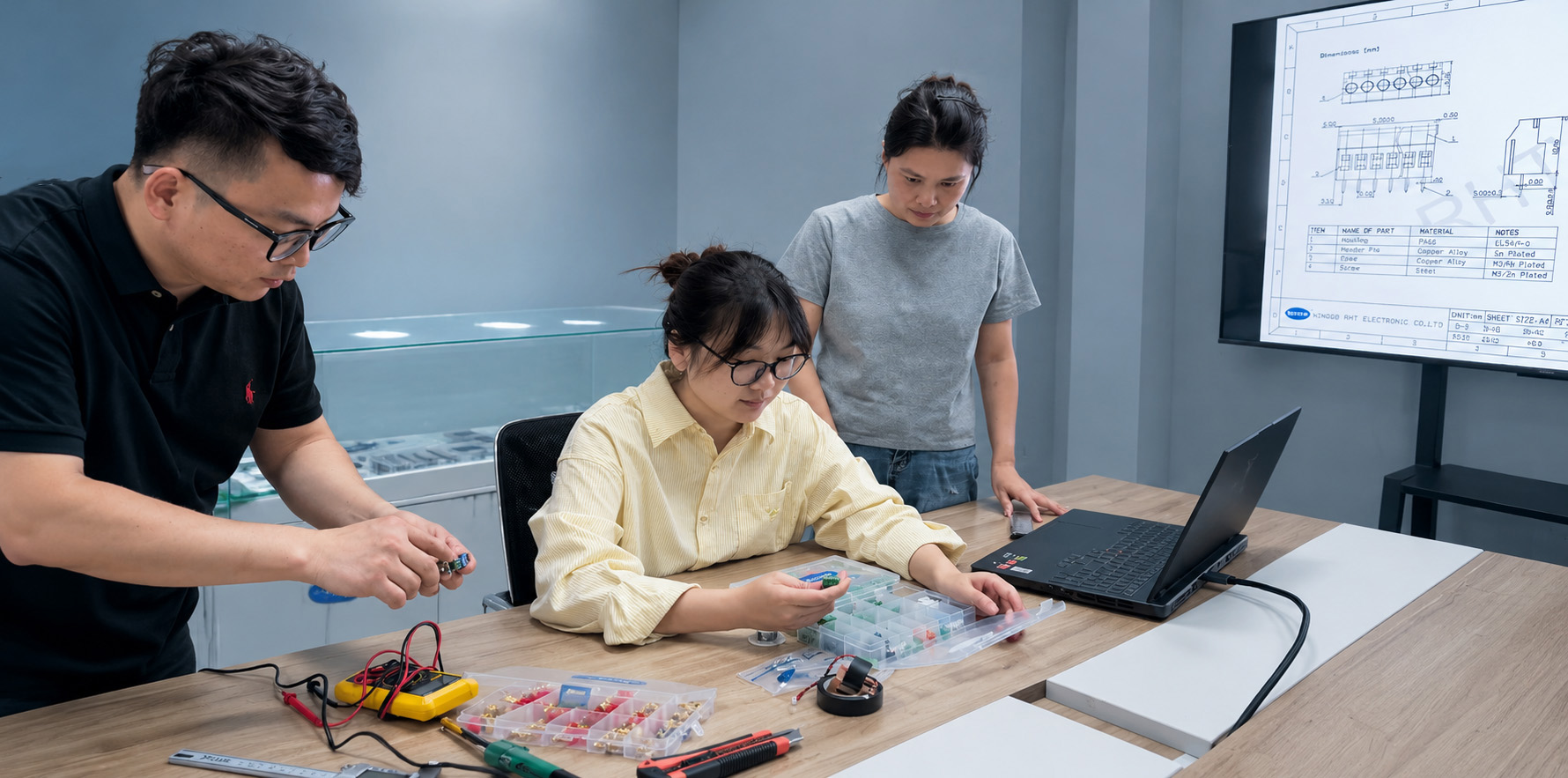
Selecting an electronic component involves more than matching specifications. Before a component enters production, its electrical characteristics, mechanical dimensions, mounting configuration and application requirements must work together.
For connectors, terminal blocks, current transformers and other electromechanical components, even small differences in dimensions or terminal positioning can affect PCB integration and assembly.
Understanding these factors early helps engineering teams make informed decisions and reduce avoidable complications during product development.
A component datasheet provides essential information, including electrical ratings, dimensions, terminal configurations and operating conditions. However, meeting the listed specifications does not automatically guarantee compatibility with a particular application.
For example, a connector may have the correct pitch and number of positions, but its mounting orientation or terminal geometry may not match the intended PCB layout. A terminal block may satisfy the electrical requirements while introducing constraints related to wiring access or assembly clearance.
Similarly, a current transformer may meet the required electrical characteristics, yet its mounting structure, lead configuration or available installation space may require further evaluation.
These situations highlight the importance of assessing component specifications alongside the actual application requirements.
Key considerations include:
· Compatibility with the PCB footprint and mechanical structure
· Correct terminal positions, orientations and connection interfaces
· Adequate clearance for adjacent components and wiring
· Suitability for the intended assembly process
· Consistency between the selected component and the latest design revision
The objective is to confirm practical compatibility rather than relying on a specification match alone.
Datasheets, engineering drawings, 3D models and physical samples provide different types of information.
A 2D drawing helps clarify dimensions, tolerances and mechanical interfaces. A 3D model can reveal spatial constraints or potential interference. Physical samples allow engineers to examine the actual component and verify selected dimensions, terminal arrangements or mounting characteristics.
Reviewing these sources together can help identify differences that may otherwise go unnoticed.
For example, a revised PCB footprint may affect component positioning, while a change in the mechanical structure may introduce new clearance requirements. Comparing the relevant drawings with physical samples can help clarify whether the selected component remains suitable.
The appropriate verification method depends on the application and the specific question being investigated. Sample inspection alone does not replace any necessary electrical, mechanical or process validation.
It is also important to confirm that the drawings, samples and product configurations being reviewed correspond to the same revision. Clear technical documentation helps prevent misunderstandings during design evaluation.
A component that works in an initial prototype is not automatically suitable for every production environment.
As a project progresses, PCB layouts may change, assembly processes may be refined and production requirements may become more clearly defined. These developments can affect component suitability even when the component itself remains unchanged.
Engineering teams need to verify technical compatibility, while manufacturing teams assess assembly requirements. Procurement and supply chain teams must also consider availability, lead times, sourcing consistency and anticipated production volumes.
Although these responsibilities differ, they depend on a shared understanding of the component and its intended application.
Communicating relevant technical information early gives the teams involved more opportunity to identify unresolved questions, evaluate design changes and determine whether additional verification is necessary before production decisions are finalized.
This approach cannot eliminate every production risk, but it can support more informed decisions and a more predictable development process.
Before finalizing component selection, engineering teams can consider four practical steps:
1. Define the application requirements. Establish the essential electrical, mechanical and environmental requirements, together with the intended operating and assembly conditions.
2. Review the technical documentation. Compare datasheets, drawings, PCB footprints and 3D models where available. Identify potential differences between component specifications and application requirements.
3. Verify critical interfaces. Where necessary, use physical samples, dimensional checks or other appropriate validation methods to investigate unresolved technical questions.
4. Confirm the production configuration. Ensure that the relevant component version, drawing revision, interface requirements and outstanding technical questions have been reviewed by the appropriate teams.
The depth of evaluation should reflect the complexity and risk of the application. The goal is not to introduce unnecessary procedures, but to verify the details that matter before moving forward.
Component selection connects electrical requirements, mechanical integration, manufacturing conditions and supply considerations. A change in one area can influence another, making clear technical communication important throughout product development.
At RHT, we recognize the importance of evaluating components in the context of their intended applications, rather than considering part numbers and datasheet specifications in isolation.
By combining technical documentation, application requirements and appropriate verification, engineering teams can make better-informed decisions and address uncertainties at the right stage.
A component is not fully evaluated simply because its specifications match. Its suitability depends on how those specifications work within the actual application.
